
AMT: A Trusted Name in Scale Modelling

For more than 75 years, AMT has been fulfilling the scale-sized dreams of model enthusiasts of all ages. From a modest post-war job shop for cast-aluminium models for Midwest American auto dealers, to one of the world’s most prominent names in plastic injection models, AMT’s accuracy and period-driven variety have earned it the honour of arguably being the industry’s most highly regarded manufacturer from model building’s golden age.
The golden age of model building may be long gone, but AMT is still in the business of producing many of the most memorable automotive and sci-fi based kits on the planet. And since modelling isn’t considered just a young person’s pastime anymore, there’s never been a better time for scale model enthusiasts of every age to acquaint (or reacquaint) themselves with AMT’s amazing model lineup.
AMT Makes the Mark By bridging Generations of Modellers
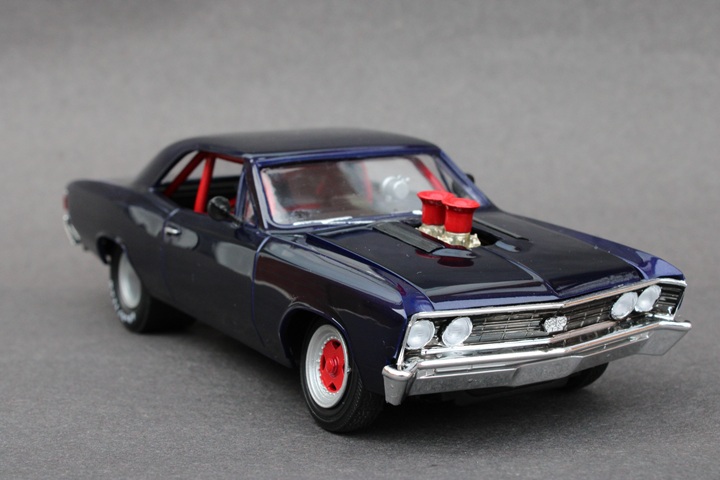
It’s a fact: for genuine modelling enthusiasts, assembling a vintage scale model kit is like taking a trip through time. That’s because there’s more to a great model than just plastic and paint: there’s passion. And when it comes to the passion of model building, classic AMT model car and sci-fi kits are the gold standard at the heart of scale modelling.
AMT boasts the most recognisable lineup of vintage 1/24 and 1/25 American big rigs, muscle cars and dragsters, and 1/72 and 1/537 Star Wars and Star Trek models. And yet, while AMT models enjoy a good amount of raised and panel line detail, it’s their feeling of nostalgia that carries the most value. Many of AMT’s most revered kits still utilise tooling from the 1960s and 1970s, evoking a level of vintage model-building charm that other manufacturers simply can’t duplicate.
- The perfect mix of reference and retrospect. Whether it’s one of the classic 18-wheelers that dominated American highways, an admired hotrod or muscle car, or one of the star vehicles from the era’s most popular movies, veteran AMT kits excel at arousing the kind of enthusiasm that was common during the generation when they all appeared.
- The thrill of the build. Experienced and novice modellers alike all know AMT’s reputation for producing models that excite. AMT understands the importance of the thrill of the build, and it’s particularly evident in their unique 3-in-1 kits that allow modellers to build a vehicle as either a factory original, a modified street rod or in a classic competition configuration.
- The freedom to detail, or not. Because the older tooling used to produce many of AMT’s vintage kits lacks the degree of fine detail that modern manufacturer’s tooling has, AMT kits leave the 1:1 details up to the builder. Lower part counts and simpler designs allow builders to pursue the level of prototypical accuracy they want without overwhelming them.
Possibly the most distinctive attribute of AMT plastic models is their ability to bridge different generations of modellers. Experienced modellers are drawn to the 60s and 70s kits because they represent the interests of the time: fast cars and space travel. And for beginners, the same AMT models provide an unvarnished look at how modelling, motoring and even science fiction all shaped the era.
Round 2 Tooling Adds a New Dimension To the AMT Lineup
Although AMT is best known for vintage stampings of classic plastic kits like their 1957 Bel Air, the 1940 Ford Coupe and 1965 Pontiac Grand Prix, they also offer a range of new kits based on 2012-and-later tooling from their parent company, Round 2. Not only do these kits include newly tooled and updated versions of some of AMT’s most iconic classic models, but also offer a growing array of 21st century muscle car issues like the 2013 ZL1 Camaro, the 2016 Camaro SS and the 1997 Mustang Cobra.
The moment a modeller opens the box, the differences between original AMT kits and new Round 2 AMT model kits are unmistakeable, and they include:
- Sharper lines and paneling. Round 2 kits contain more parts than their vintage AMT equivalents. They also feature higher detailed parts with sharper lines and paneling, and better synthetic and acrylic parts.
- Improvements in part fits. Vintage 60s and 70s AMT kit parts are known for their imperfect fit. Round 2 kit parts offer a significantly better fit, requiring less flash trimming, sanding and filling to fit together perfectly.
- Better quality decal details. Round 2 decals are crisper and cleaner than AMT’s vintage decal sheets. Their improved print registration offers better colour separation than earlier variants of decals, along with updated logos and livery styling.
Make no mistake: while there are plenty of model builders who enjoy the challenge of kitbashing and reworking vintage AMT kits, Round 2 kits allow builders to concentrate on the more relaxing aspects of the build itself.
There are also material differences between vintage 60s and 70s AMT kits and their 21st century counterparts – and because variations in plastic compositions can easily affect how a modeller approaches a build, it’s important to be aware of what those differences are, and how they can possibly impact kit choices.
Identifying the Differences Between AMT Plastic Blends
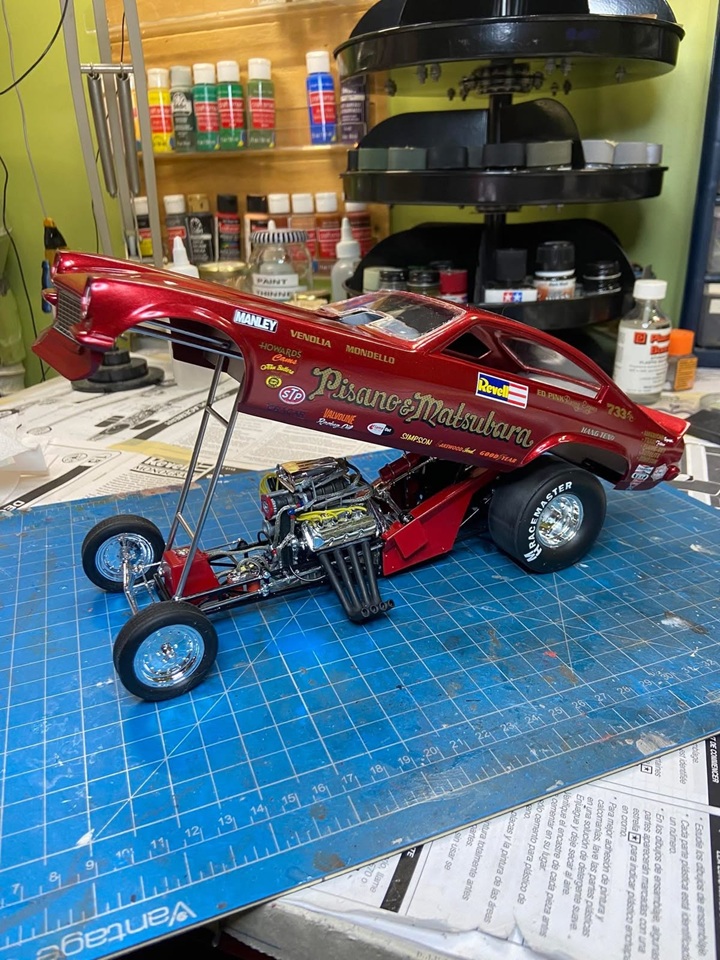
It’s no surprise that AMT understands the importance of materials in model manufacturing more than almost any of their contemporaries; the company’s history began with manufacturing aluminium model toys, hence the abbreviation AMT. Their plastic kits alone have undergone three distinct stages of material evolution over the decades, and a considerable portion of the AMT building experience comes from to the type of styrene the release was moulded from.
- The coloured styrenes of the 60s and 70s. AMT’s legendary 60s and 70s stampings were moulded in a range of colours like white, blue, red and orange from a soft and flexible styrene formulation. This plastic blend works exceptionally well with styrene glues, and is still preferred by modellers who enjoy the sanding and filling that are hallmarks of making perfect fits.
- The grey styrenes of the 80s, 90s and early 2000s. AMT migrated away from the soft styrenes of the 60s and 70s in favour of a more rigid, grey-coloured blend. This smooth-surfaced formulation is unmistakably harder and slicker than AMT’s earlier blend, making it more difficult to customise, as well as to prime and paint.
- The Round 2 styrenes from 2008 to present. The styrenes used with Round 2 plastics combine the best qualities of the two earlier generations of blends. These styrenes are bright white, and offer a good balance of flexibility and rigidity giving them the strength of the 80s-era blend with the light workability and easy customisation of the 70s-era material.
With a choice of plastic blends covering a full range of vintage and new models, AMT offers the ideal mix of materials for every modeller’s experience level. It behooves modellers, however, to be aware of the differences, and to verify the copyright date on each box to identify the kit’s era, as well as to confirm which blend of plastic was used.
The Final Word
At the end of the day, in an industry where manufacturers typically spend decades working on product lines that they hope enthusiasts will identify with, AMT’s dominance of historical automotive and science fiction kits has existed from day one.
From the beginning, they chose to focus on a core of kits that were relevant to the times and modellers could instantly relate to. And more than half a century later, the same iconic lineup is virtually unchanged and even more popular than it was during modelling’s golden era.
Classic AMT model car and sci-fi kits may be the gold standard for scale modelling, but in reality, they’re much more. No other model manufacturer has done more to propel the imaginations and the emotions of modellers for so long, and it’s a feeling that both experienced and beginning builders can still feel today.