
The Dress Watch Guide: How to Choose a Timeless Style

A watch can be the finishing touch that pulls your outfit together without stealing the spotlight. It slips neatly beneath a shirt cuff, complements tailoring, and adds a little polish when you are dressing for a special occasion. The challenge is finding one that suits your personal style and feels versatile enough to wear beyond the occasional formal event.
Before you choose one, it helps to understand what makes a watch work well with dressier clothing. Case size, dial design, strap, movement, and overall proportions all play a part. Once you know what to look for, you can shop with greater confidence and find a watch that feels right on your wrist.
What Are Dress Watches?
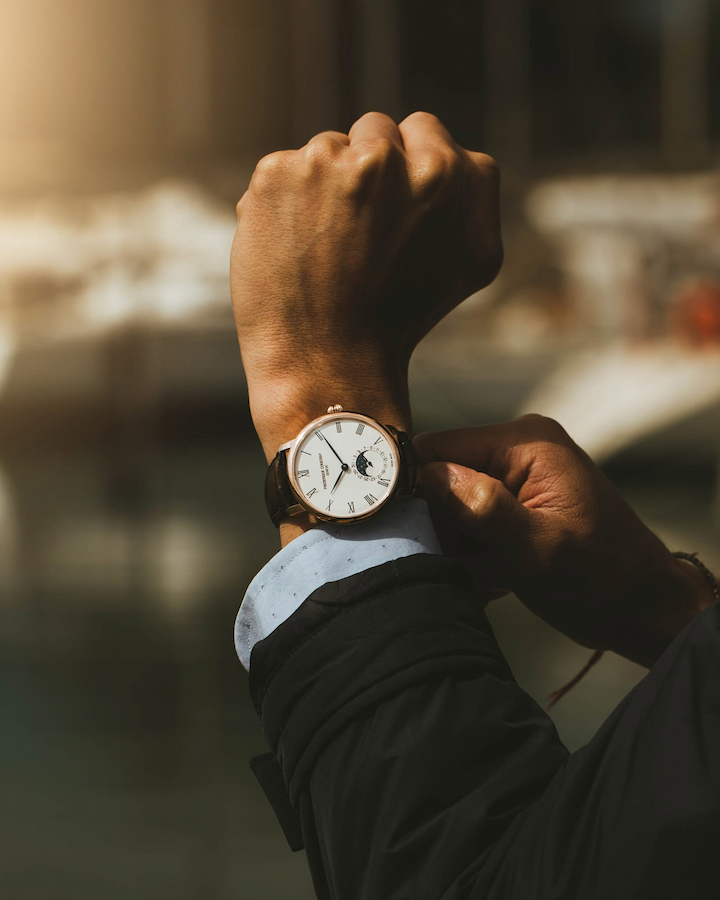
Traditionally, a well-designed and durable dress watch is a slim, understated timepiece that complements formal and smart outfits. Instead of relying on a large case, a busy dial or sporty features, it keeps the design clean, balanced and refined.
Classic examples often feature:
- Simple dials
- Restrained hour markers
- Slim hands
- Relatively thin cases
- Leather straps
Modern designs may use different materials and finishes while retaining an elegant appearance.
That simplicity is central to the appeal. Your watch should complement your outfit rather than compete with it. Ideally, people notice your overall look first, with the watch adding a subtle finishing touch.
You also do not need to save it for black-tie events. The right design can work with a suit, business attire, or a smart-casual outfit. The key is to buy dress watches that are versatile enough to suit the way you actually dress.
Choosing the Right Dress Watch Style
When you are choosing a dress watch, begin with the overall proportions rather than focusing on a single feature. Even a beautifully designed watch can feel out of place if the case overwhelms your wrist or the dial clashes with your wardrobe.
Keep the Case Proportional
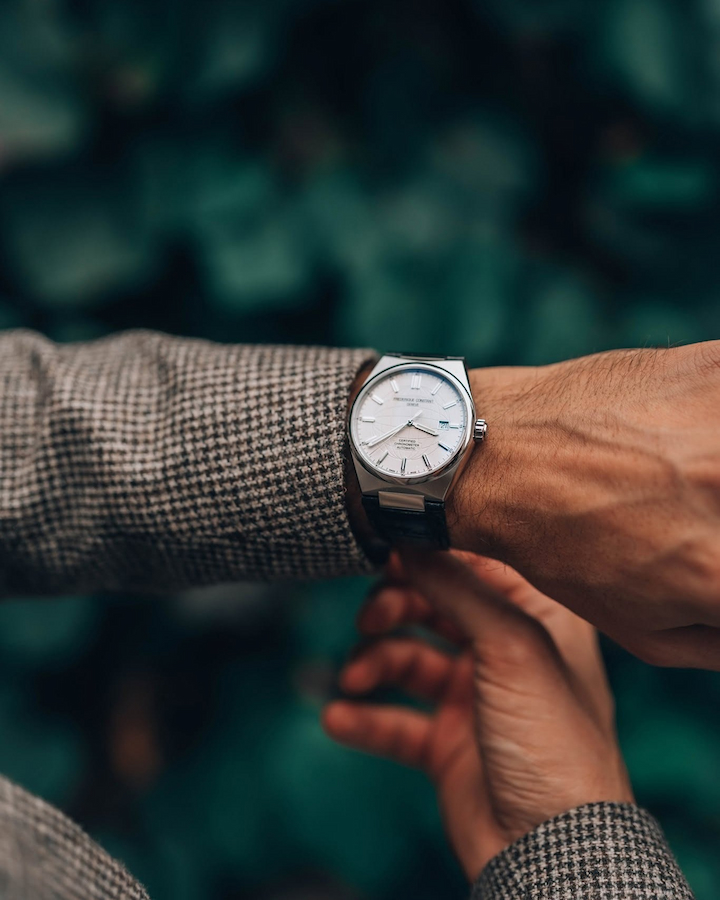
Slim cases are traditionally associated with dress watches because they can slide comfortably beneath a shirt cuff. A compact case also tends to create a more understated appearance.
Case diameter matters, but your wrist shape and the watch’s overall design matter too. Long lugs can make a watch appear larger than its diameter suggests, while a compact, rounded case may look more restrained.
Rather than choosing a size simply because it is fashionable, look at the entire silhouette. The watch should:
- Feel balanced on your wrist
- Sit comfortably
- Avoid dominating your outfit
- Fit neatly beneath a shirt cuff
Pay Attention to the Dial
The dial is one of the first details you notice, so think about how much visual interest you really want.
A simple dial with understated markers creates a classic look. Roman numerals can give the watch a more traditional character, while baton markers often feel clean and contemporary. A date window can be useful for everyday wear, but leaving out unnecessary complications may give the watch a more elegant, minimalist appearance.
Colour also influences the watch’s personality. White, cream and silver dials tend to feel classic and versatile, while darker shades can create a more distinctive or dramatic look.
Choose the Right Strap
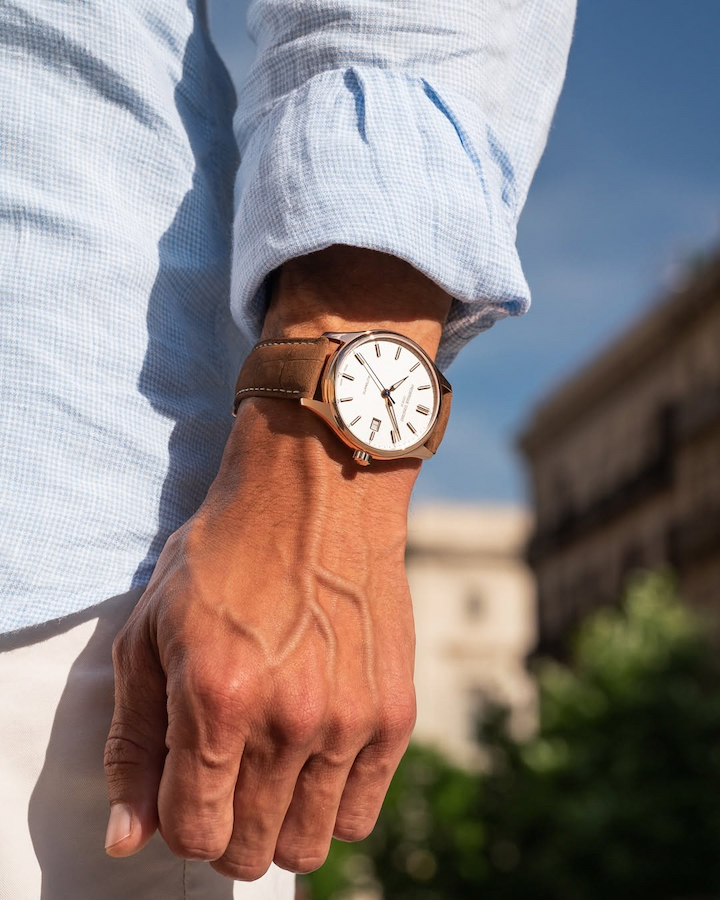
The strap can change the entire character of a watch. Leather remains a classic option for dressier styles, with black and brown being particularly easy to wear.
- Black leather pairs naturally with formal tailoring.
- Brown leather feels slightly more relaxed.
- Coordinated leather accessories can make an outfit feel more deliberate.
- A neutral strap colour usually offers the greatest versatility.
As you choose, consider the rest of your wardrobe. You do not need to match every accessory exactly, but a coordinated colour palette can make your outfit feel more polished.
Key Features to Consider Before You Buy
Once you have narrowed down the style, turn your attention to the practical details. A watch can look beautiful, but it also needs to feel comfortable and perform reliably.
Movement
The movement powers the watch, and you will generally come across mechanical, automatic and quartz options.
- Mechanical watches need to be wound by hand.
- Automatic watches wind themselves as you move your wrist.
- Quartz watches run on a battery.
- Quartz movements are generally known for accuracy and low maintenance.
- Mechanical and automatic movements may appeal to those who value traditional watchmaking.
Your choice depends on what matters most to you. If you appreciate traditional watchmaking and mechanical craftsmanship, an automatic or mechanical movement may be especially appealing. If you want something accurate, straightforward and easy to maintain, quartz can be the practical choice.
Case Material
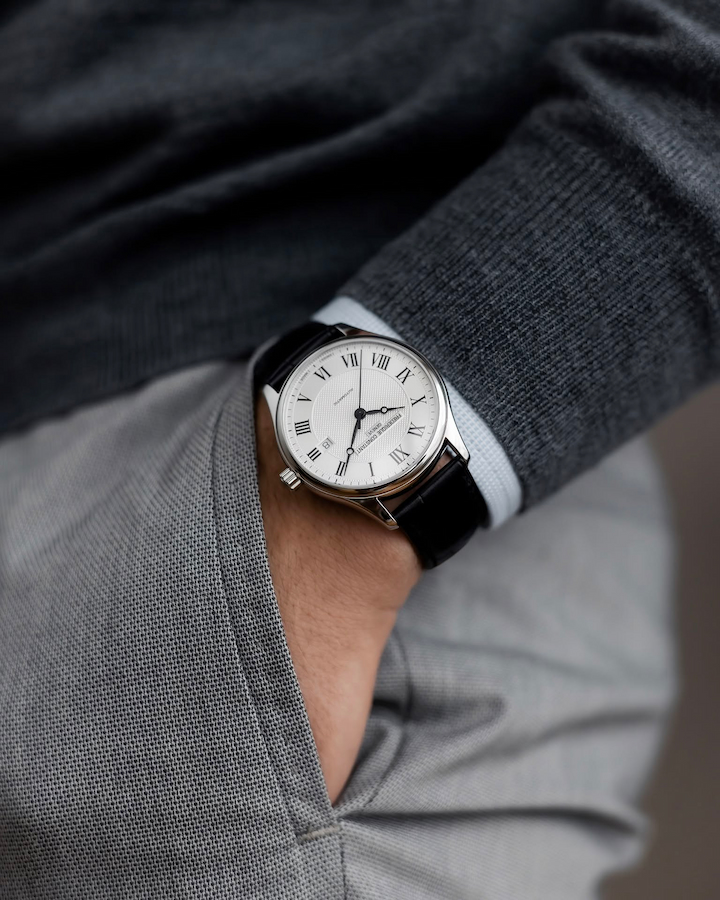
The case material affects both the watch’s appearance and its durability. Stainless steel remains popular because it offers a versatile look and can handle everyday wear. Other materials and finishes can create a different visual effect, so consider how the watch will fit with the clothes and accessories you already own.
You should also look at the case finish:
- Polished surfaces can appear especially refined.
- Brushed finishes tend to create a quieter, more understated look.
- Mixed finishes can add subtle visual interest without making the watch feel busy.
Water Resistance
A dress watch is not automatically suitable for swimming or other water-heavy activities. Check the manufacturer’s water-resistance rating and make sure you understand what it covers.
Even if you plan to wear your watch mainly to dinners, meetings and events, some water resistance can protect it from everyday splashes. Just do not assume that any rating makes the watch suitable for swimming or prolonged exposure to water.
Comfort and Fit
You are far more likely to wear your watch regularly if it feels comfortable. Pay attention to:
- Case thickness
- Strap material
- Buckle design
- Overall weight
- How the watch sits on your wrist
The strap should feel secure without being too tight. If the watch moves around excessively, it can become irritating; if it feels restrictive, you may stop wearing it altogether.
If you can, try the watch on before making your final decision. Look at it from different angles and check how the case sits on your wrist. A few minutes of wear can tell you much more than a product photograph.
Versatility
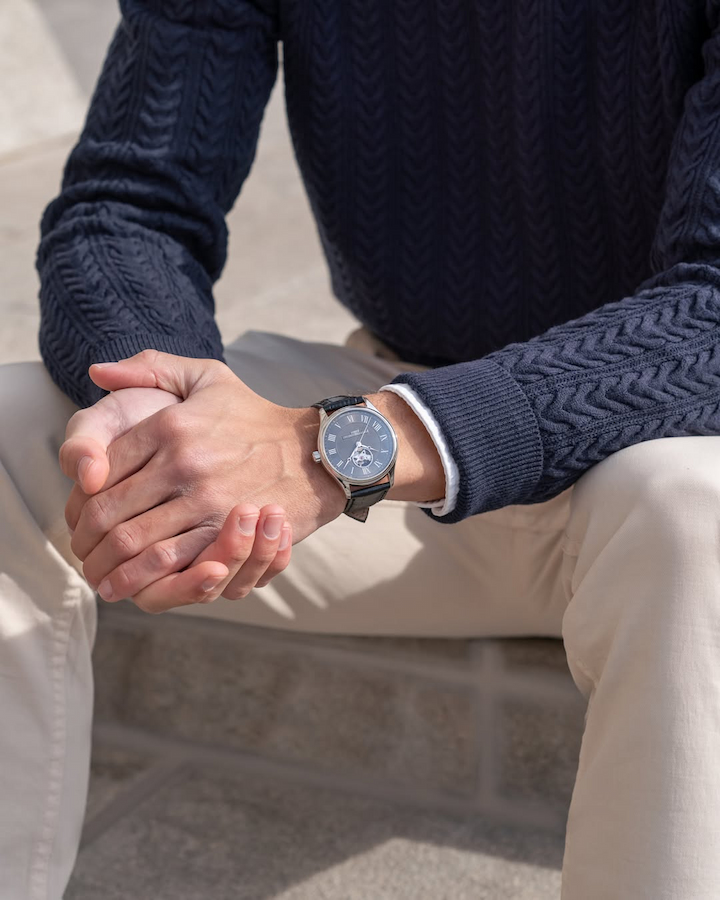
Think beyond the first outfit you have in mind before you buy dress watches. Could you wear the watch to a formal dinner and then pair it with a smart shirt the following week? Does the colour work with most of your wardrobe? Would you still enjoy wearing it several years from now?
A versatile watch can become a dependable part of your wardrobe rather than an accessory you only remember when a particular invitation arrives.