
7 Reasons Why You Need a Saucepan in Your Kitchenware Collection

Trying out new recipes can get confusing; there are always measurements you don’t understand, utensils that magically get lost, or you just don’t know which cookware to throw your ingredients in.
Wouldn’t it be great if you had one piece of cookware for all your recipes? Enter the saucepan: versatile, practical, and easy to use. What more could you need from cookware?
Here are seven great reasons to add a saucepan to your kitchenware collection!
What Is a Saucepan?
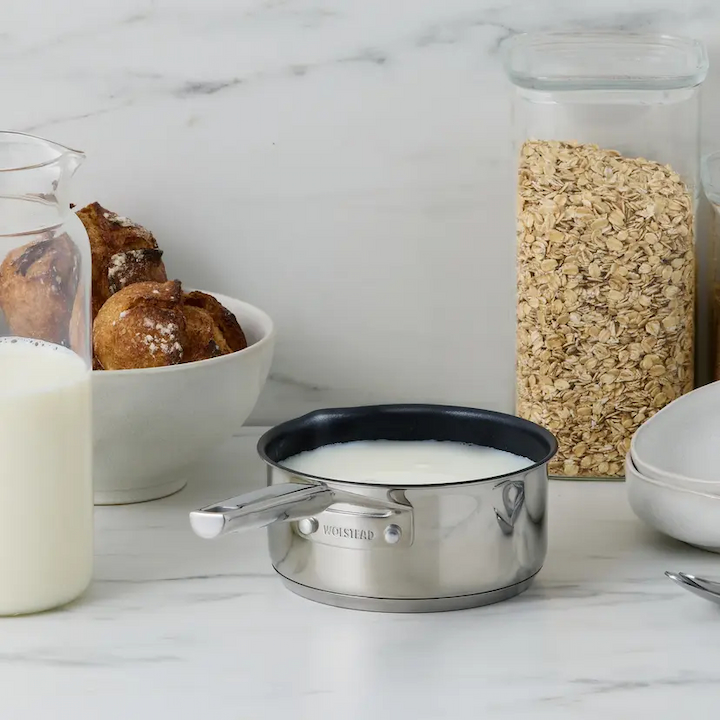
Saucepans are one of the most popular styles of cookware used both in professional and home kitchens. They are round utensils, recognisable by their small perimeter, flat base, and tall edges. What makes saucepans stand apart from pots is their long handle, which provides a good grip while stirring. Saucepans come with a tight-fitting lid, which retains moisture and keeps heat from escaping, making them ideal for boiling and simmering food.
Saucepans were first seen in the 17th century and were primarily used to make sauces, soups, and other liquids. Since then, you can see an evolution in their design. Now, you can use a saucepan for boiling pasta, poaching eggs, and even deep-frying, due to the many advancements in its material design.
Reasons Why You Should Get One
1. Sauce Making
Saucepans were first invented with the intention of cooking sauces, and for a good reason. Their height and straight sides contain the liquid well inside, preventing unwanted spills and splattering even at higher temperatures.
Their high edges allow you to cook higher quantities of sauce and provide a firm grip on the handle for increased strength when stirring to prevent the pan from slipping on the stove. The flat-bottom design allows heat to be evenly distributed, ensuring your sauce is equally cooked everywhere.
2. Made From Various Materials
The best thing about saucepans is their versatility in material composition. Just like any other product, the price of a saucepan varies significantly depending on which material it’s composed of.
- Aluminium saucepans – The cheapest saucepans tend to be made out of aluminium. This material is fairly thin and conducts heat well, which means it heats up quickly and distributes the heat evenly. The downside of using aluminium as the only material is that it doesn’t hold heat very well, making it impractical for searing food.
- Stainless steel – A step above aluminium is stainless steel. Steel is a durable and non-reactive metal, which means that it tolerates all ingredients. On the other hand, its thickness prevents even heat distribution, resulting in random hotspots in your food.
- Cast-iron saucepans – By far the best saucepans are cast iron. They might take a while to heat up, so it’s recommended to preheat them well. However, when they are well-heated, they retain the heat for a longer period, making them ideal for searing food. Because they have a flat bottom, the heat can spread out evenly, cooking your food the same way all over.
3. Compact Size
Saucepans’ unique design and smaller size offer multiple benefits, boosting them higher on the list of most practical cookware. Their smaller diameter allows you to prepare smaller batches of sauces, control the reduction of liquids, and manage the heat more precisely due to the lower thermal mass.
4. Confit Cooking
You might be wondering what confit even means.
Confit is both a noun and a verb, deriving from the French word confire, which means to preserve. This cooking technique involves submerging food, such as meat, fruit, or vegetables, in a liquid medium and letting it cook over slow heat for a longer period.
Saucepans’ shape allows you to easily submerge the food, covering all surfaces, while the even bottom provides even heat transfer from the stove to the pan, cooking it to perfection.
5. Can Be Used Both as a Pot and a Pan
Saucepans are truly the best of both worlds. Their depth provides space to fit liquids, allowing you to boil pasta and make delicious soups and sauces with ease. On the other hand, the even heat distribution makes frying and searing meat as simple as ever. So when you are cooking a complicated recipe, ditch the pot and the pan; they only take up extra space. Reach for your saucepan instead.
6. Comes in a Variety of Sizes
Saucepans are generally classified in three main sizes: small (1-2 litres), medium (2.5-3.5 litres), and large (over 4 litres).
Small saucepans are ideal for cooking for one or two people. Medium ones are often used for making small batches of sauces and preparing grains, while large saucepans are best for cooking large rations for your family or guests.
7. Stove Top Compatibility
Besides your preferred cooking style, you should also match your pan to your stovetop. For some stoves to work with induction cooking, the cooktop needs to create an electromagnetic field that causes eddy currents inside the pan. This means that the cookware needs to be made of magnetic materials. Luckily, most saucepans are made of metals, making them compatible with a variety of stovetops.
Conclusion
Now that you know the benefits of having a saucepan in your kitchen, you’re ready to pick the right one for your cookware collection.
Whether you prefer smaller pans, classical steel ones, or something else entirely, hopefully, these reasons will give you inspiration to use them.